Episode 110: How to Get Your Energy Back When Rest Isn’t Working
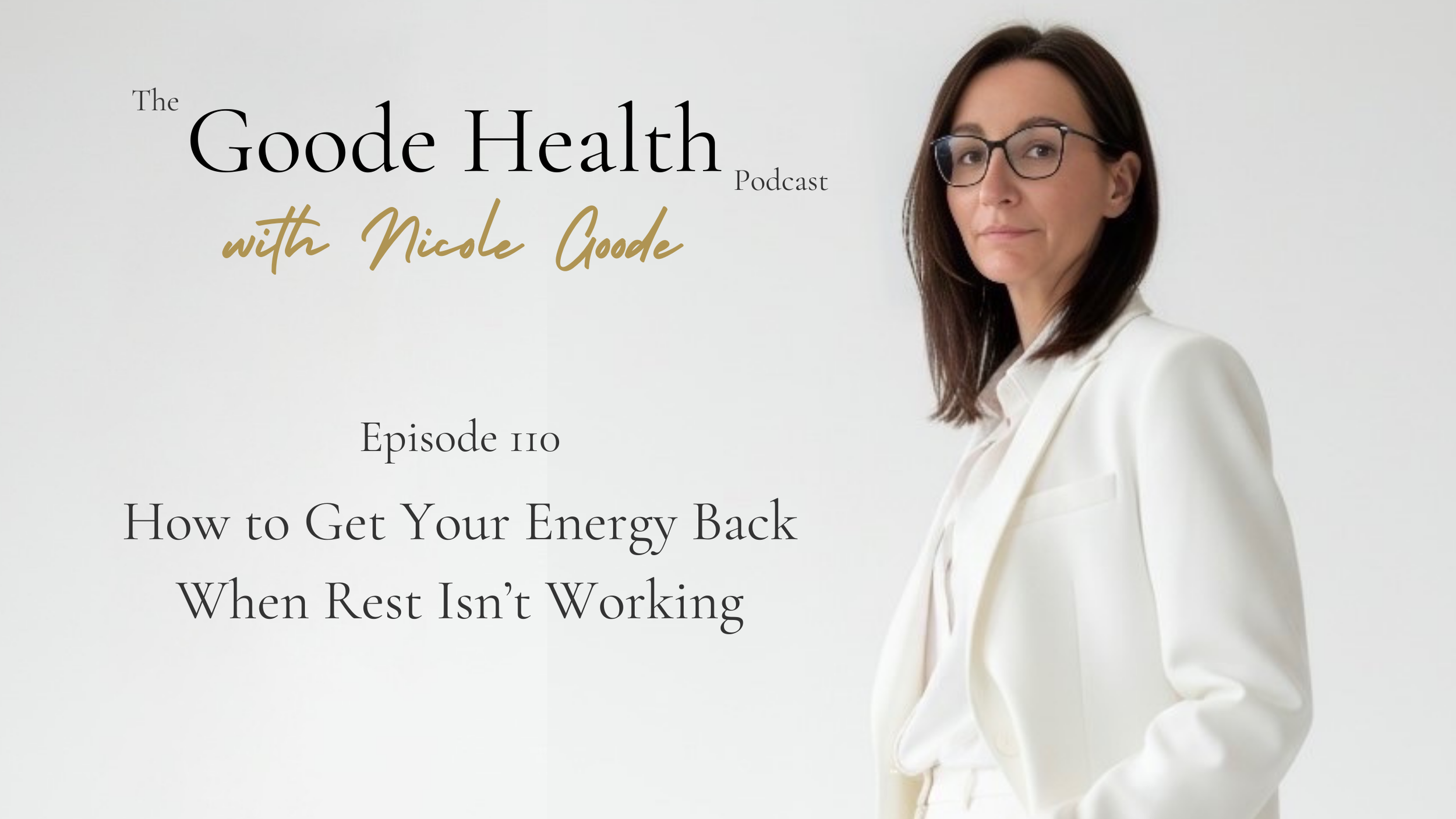
If you’ve been resting more, doing less, and still feel tired, this episode explains why rest alone often isn’t enough to restore energy and what actually helps. In this episode of The Good Health Podcast, Nicole Good unpacks why low energy can persist even when you’re doing “all the right things,” and why trying harder or adding more routines often makes exhaustion worse instead of better.
You’ll learn what’s really happening inside the body when energy is low, including how stress signalling, blood sugar instability, sleep disruption, and nervous system overload can prevent rest from becoming restorative. Nicole introduces the difference between passive rest and active recovery, and explains why energy returns when the body feels safe, supported, and guided — not pushed. This episode helps you understand why your body isn’t broken, and why fatigue is often a signal about timing, capacity, and foundations rather than effort or motivation.
This episode answers questions like:
“Why rest doesn’t fix ongoing fatigue”
“How to rebuild energy after burnout”
“Why adding more routines and supplements backfires”
“How nervous system impacts energy recovery”
“The role of blood sugar in fatigue”
Nicole then shares a clear, compassionate framework for rebuilding energy safely, based on timing, foundational support, and listening to feedback. This episode is designed to leave you feeling clearer and more empowered, not overwhelmed, with a better understanding of what your body needs right now and what can wait. It also includes an invitation to the Goode Health Studio, a paced and structured space for rebuilding energy without burning yourself out further.
DISCLAIMER: The content in this podcast and related website is not intended to be a substitute for medical advice. It is not intended to be used to diagnose or treat, instead it is designed to help educate and inspire. Always seek the advice of a professional medical practitioner or qualified health practitioner. Never ignore or disregard advice given to you based on information in this podcast or related website and do not delay in seeking medical advice.
Timestamps:
[04:05] - Why Rest Alone Doesn’t Restore Energy
Why simply resting more often fails to fix low energy, and what needs to be in place for rest to actually become restorative.
[06:15] - The 3 Pillars of Safe Energy Rebuilding
An overview of the core framework for rebuilding energy sustainably without pushing the body into further depletion.
[06:50] - Pillar 1: Timing (Working With Your Body’s Rhythms)
How circadian rhythm, cortisol timing, meal timing, and sleep windows affect energy recovery. And why doing the right thing at the wrong time can backfire.
[08:25] - Pillar 2: Foundations (Stabilising Before Optimising)
Why sleep quality, blood sugar balance, and nervous system regulation are essential foundations for restoring energy predictably.
[10:00] - Pillar 3: Feedback (Listening to Your Body’s Signals)
How symptoms like fatigue, crashes, and poor sleep are feedback about capacity. And why ignoring them delays recovery.
[11:45] - The Core Problem With Energy Recovery
Why most people struggle to rebuild energy: sequencing. Addressing too many systems at once overwhelms the body and prevents sustainable progress.
[13:15] - What the Good Health Studio Is Designed to Support
How structured pacing, sequencing, and guided support help rebuild energy without overwhelm or burnout.
“One of the most common reasons energy doesn’t come back is because people respond to exhaustion by trying harder. More routines. More supplements. More effort. But effort itself is a demand. Planning, tracking, and maintaining ‘healthy habits’ all require energy. When capacity is already low, even good things can quietly push the system further into depletion. Energy recovery isn’t about willpower, it’s about giving the body the right support at the right time.”
Essential learnings from this episode…
Rest alone doesn’t restore energy when the body isn’t ready to use it. Low energy often persists because stress signalling, blood sugar instability, or poor sleep keep the nervous system in a state of vigilance.
Adding routines, supplements, or effort increases demand on an already depleted system, pushing energy lower rather than supporting recovery.
Energy recovery depends on timing, not just healthy habits. Exercise, fasting, early mornings, or late nights can be supportive or draining depending on when they’re introduced and the body’s current capacity.
Foundations matter more than optimisation. Sleep quality, blood sugar balance, and nervous system regulation create the stability required for energy to rebuild in a predictable way.
Post-exertional crashes, brain fog, or disrupted sleep are signals about capacity and recovery — listening to them prevents repeated setbacks.
Energy rebuilds in layers when the body feels safe, supported, and guided. This is why structured, step-by-step support leads to lasting change.
EPISODE 110
Important links & mentions from this episode
Take the FREE MitoImmune Health Assessment
Check Out our Updated Packages
Thank You For Tuning In
We are so grateful for you tuning in today to our podcast. If you enjoyed today’s show, you can really help us spread the word by sharing the episode and joining in on the conversation over on Instagram @goode_health.
Rating and reviewing the episode is highly helpful, I promise I read every single one and reviewing the show really helps us in the podcast charts.
Finally, don’t forget to subscribe to the show on your favourite podcast player so that you don’t miss an episode!