Episode 118: Blood Tests Are “Normal” But You Feel Awful: 5 Markers Your Doctor May Miss
Have you ever been told your blood tests are normal, even though you’re dealing with fatigue, brain fog, hair thinning, or energy crashes that don’t make sense? In this episode of The Goode Health Podcast, Nicole Goode explains why standard blood tests often miss early signs of dysfunction, and why “normal” doesn’t always mean optimal health.
Nicole walks through five key lab markers functional medicine practitioners use to uncover hidden health issues that conventional blood panels often overlook. You’ll learn why fasting insulin can reveal insulin resistance years before diabetes develops, how a full thyroid panel can identify thyroid dysfunction missed by TSH alone, why high-sensitivity CRP (hs-CRP) detects chronic inflammation, how ferritin levels affect fatigue and hair health, and why a cortisol rhythm test can reveal underlying stress and HPA axis dysfunction.
This episode answers questions like:
“Why am I tired all the time but blood tests are normal?”
“Fatigue but normal labs”
“Functional medicine blood tests”
“Difference between functional and standard lab ranges”
“Normal TSH but hypothyroid symptoms”
“Early insulin resistance symptoms”
“Low-grade inflammation symptoms”
If you’ve ever felt dismissed by “normal” lab results but know something in your body isn’t right, this episode will help you understand what may be missing from your testing, what questions to ask your doctor, and which markers can uncover the root causes of fatigue, hormonal imbalance, and metabolic dysfunction. This episode also includes an invitation to the Goode Health Studio.
DISCLAIMER: The content in this podcast and related website is not intended to be a substitute for medical advice. It is not intended to be used to diagnose or treat, instead it is designed to help educate and inspire. Always seek the advice of a professional medical practitioner or qualified health practitioner. Never ignore or disregard advice given to you based on information in this podcast or related website and do not delay in seeking medical advice.
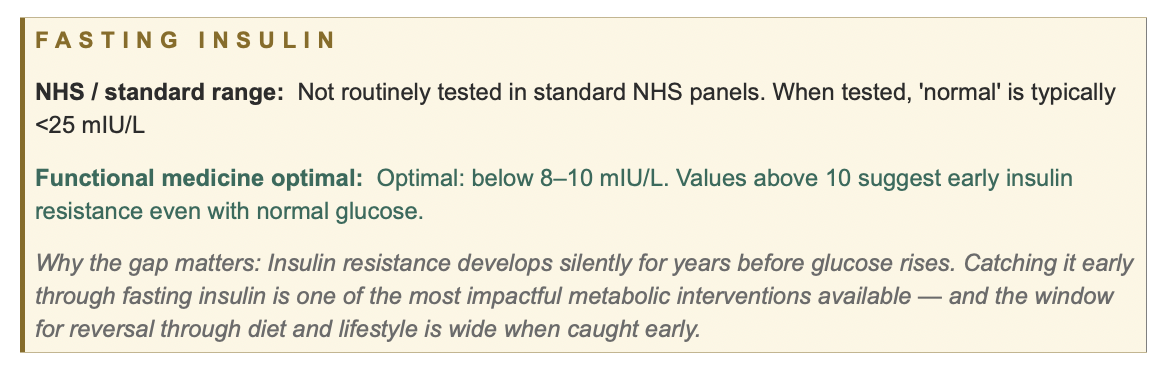
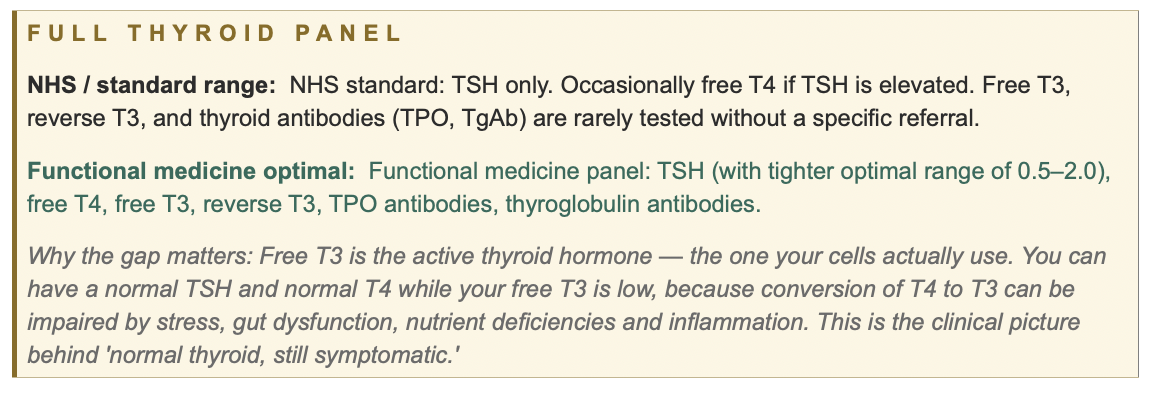
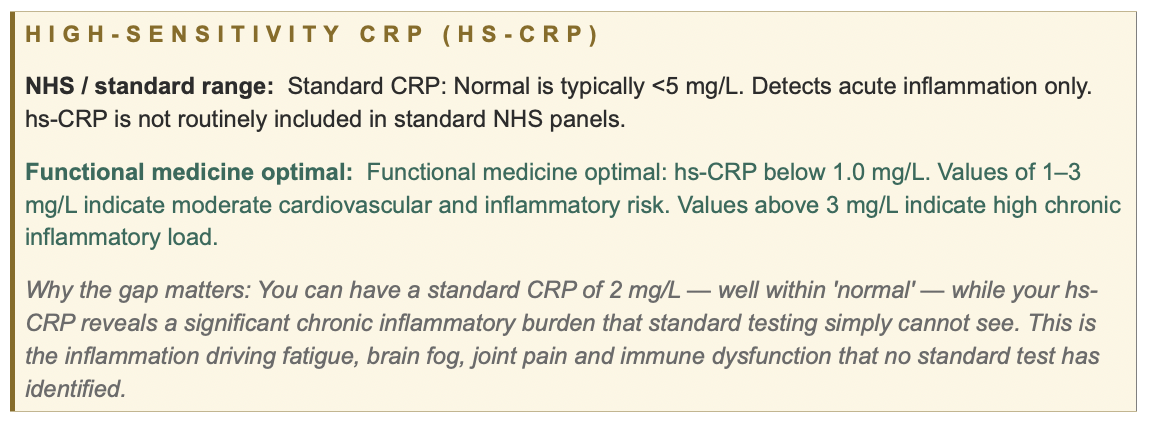
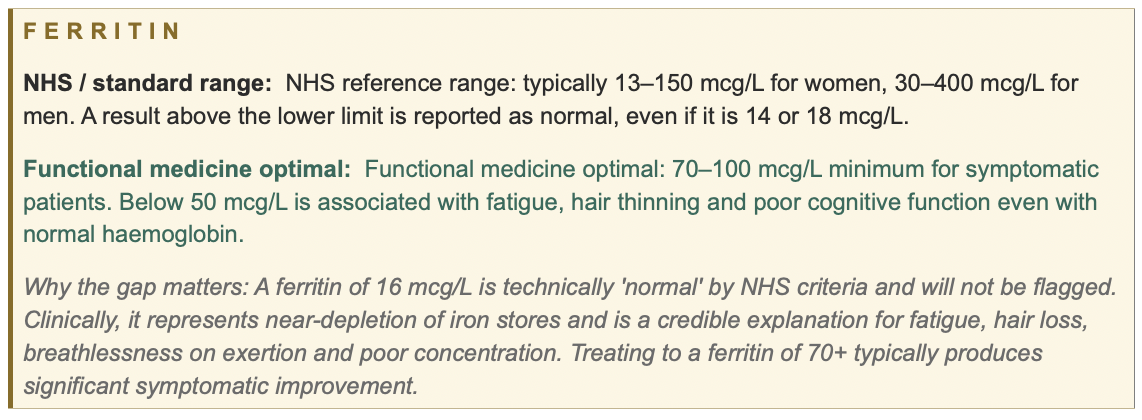
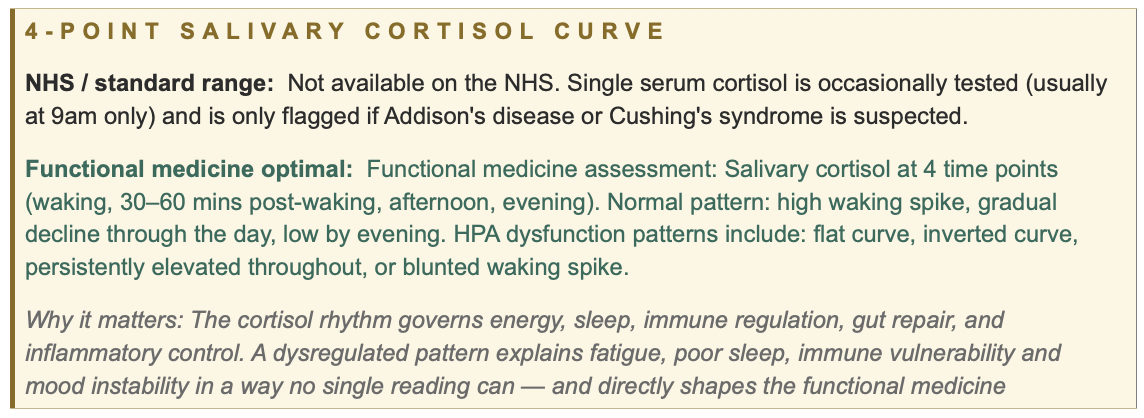
Testing Reference Ranges:
Timestamps:
[02:28] - Why “Normal” Blood Tests Don’t Always Mean Optimal Health
Understanding NHS reference ranges and why standard blood tests are designed to detect disease, not early dysfunction. The difference between “normal” lab results and optimal health ranges in functional medicine.
[04:20] - Marker #1: Fasting Insulin (Early Detection of Insulin Resistance)
Why fasting glucose alone can miss early metabolic dysfunction. Learn how fasting insulin and the HOMA-IR calculation can identify insulin resistance years before diabetes develops.
[07:05] - Marker #2: A Full Thyroid Panel (Beyond TSH Testing)
Why testing TSH alone often misses thyroid dysfunction. Nicole explains the importance of testing Free T3, Free T4, TPO antibodies, and TG antibodies to detect early thyroid issues and Hashimoto’s.
[11:43] - Marker #3: hs-CRP (High-Sensitivity C-Reactive Protein)
How hs-CRP reveals chronic low-grade inflammation linked to autoimmune disease, cardiovascular risk, metabolic disorders, and gut-immune dysfunction.
[14:28] - Marker #4: Ferritin (Iron Storage and Fatigue)
Why many people suffer from iron deficiency without anemia. Learn how low ferritin can cause fatigue, hair thinning, poor exercise tolerance, and brain fog, even when hemoglobin appears normal.
[17:40] - Marker #5: Cortisol Curve (Understanding the Stress Response)
Why a single cortisol blood test isn’t enough. Nicole explains how a four-point cortisol rhythm test reveals HPA axis dysfunction, adrenal stress patterns, and “wired but tired” fatigue.
“One of the biggest misunderstandings in medicine is the idea that ‘normal’ means healthy. Laboratory reference ranges are calculated from population averages. That means if a large portion of the population has insulin resistance, thyroid dysfunction, or chronic inflammation, those patterns become part of the ‘normal’ range. Functional medicine uses optimal ranges instead, because the question isn’t ‘Is this common?’ The real question is: ‘Is this level supporting healthy function in the body?”
Essential learnings from this episode…
“Normal” blood tests don’t always mean you’re healthy. Standard lab ranges are based on population averages, meaning results can be “normal” while still reflecting suboptimal metabolic, hormonal, or immune function.
Early insulin resistance can exist years before diabetes appears. Testing fasting insulin alongside fasting glucose helps identify metabolic dysfunction early and explains symptoms like fatigue, energy crashes, and difficulty losing weight.
TSH alone isn’t enough to assess thyroid health. A full thyroid panel (TSH, Free T3, Free T4, and thyroid antibodies) provides a much clearer picture of thyroid function and can detect issues long before standard tests flag a problem.
Chronic inflammation often goes undetected on routine blood tests. The hs-CRP test can identify low-grade inflammation linked to autoimmune disease, cardiovascular risk, metabolic disorders, and long-term gut health issues.
Iron deficiency without anemia is extremely common. Low ferritin levels can cause fatigue, brain fog, and hair thinning even when hemoglobin is normal, especially in women, athletes, and people with gut absorption issues.
Your cortisol rhythm matters more than a single cortisol reading. A cortisol curve test shows how your stress hormones fluctuate throughout the day, helping identify patterns like adrenal fatigue, burnout, or the “wired but tired” state.
EPISODE 118
Important links & mentions from this episode
The Optimal You 7 Day Reset (£7.99)
Goode Health Clinic Functional Medicine Packages
Contact us for Private Testing
Episode 115: Why Your Gut Is Running Your Immune System (And What to Do When It’s Not Working)
Episode 116: The Adrenal-Gut-Immune Triangle: Why Your Gut Protocol Isn’t Working
Episode 117: How Chronic Stress Drives Autoimmune Disease (The Science Most Doctors Miss)
Take the FREE MitoImmune Health Assessment
Thank You For Tuning In
We are so grateful for you tuning in today to our podcast. If you enjoyed today’s show, you can really help us spread the word by sharing the episode and joining in on the conversation over on Instagram @goode_health.
Rating and reviewing the episode is highly helpful, I promise I read every single one and reviewing the show really helps us in the podcast charts.
Finally, don’t forget to subscribe to the show on your favourite podcast player so that you don’t miss an episode!